

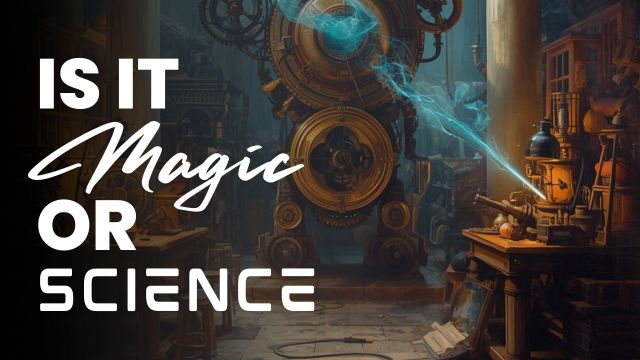
Just how different are science fiction and fantasy, anyway?
You might’ve noticed all the magically-powered tech in fantasy stories. It’s odd, but it’s not new. The Legend of Zelda did this for years, most notably in the “Wilds” era, in which ancient tribes and their lost technology are key ingredients of the story and gameplay. Disney’s done it, too, adding a powerful and somewhat autonomous crystal to the legend of Atlantis that made the city more advanced than its modern explorers, replacing the gods as its heart and demise; similarly, in Ghibli’s Castle in the Sky, the heir to a long-abandoned throne accidentally reawakens the magic core of the kingdom, and with it, everything it powered.
And, of course, there’s Christopher Keene’s new novel, War of Machines and Monsters; demons are used as fuel—not the safest energy out there.
We’ve been mystifying technology for basically as long as we’ve had it, and that’s a lot longer than you may think. Ancient Greece had a myth of an automaton, Talos, made by Hephaestus and powered by ichor, which gave him more humanity than the water-powered wonders they built later. The legend of the magic robot thrives, becoming more complex and powerful as our technology does.
So, why write these stories? It might be a way to reclaim the idea of magic in a world of advancing science. For much of human history, magic, whether a twisting of natural forces or divine ones, was an explanation for things that knowledge hadn’t caught up to yet. Magic is imagination, and we keep holding on to it. As magic slowly but surely becomes science, science starts to spark our imaginations as well, leading to new tales of old worlds where magical prowess led to progress still thought impossible.
As for why those worlds are often lost ones, that’s another age-old puzzle. What should we do with the power progress brings, and what sort of costs does it come at? We don’t seem to know. Advanced civilizations like these often run into problems that lead to their ends: some abuse their power to conquer others only to find it backfiring, while others underestimate the true power—and autonomy— of what they’ve created. It begs the question, what do you destroy in order to create, and how long until creation destroys you?
Regardless of its answer, the stories we’ve used to ask it are well worth a read.
If you're into stories about technology infused with magical powers, like Atlantis: The Lost Empire, Final Fantasy, or Stormlight Archive, then you should read War of Machines and Monsters. Available now in Amazon.



Leave A Reply